The Best Ideas for RFID Applications in Various Industries
Learn more about RFID applications in a variety of industries and see how this technology can be used to streamline processes.
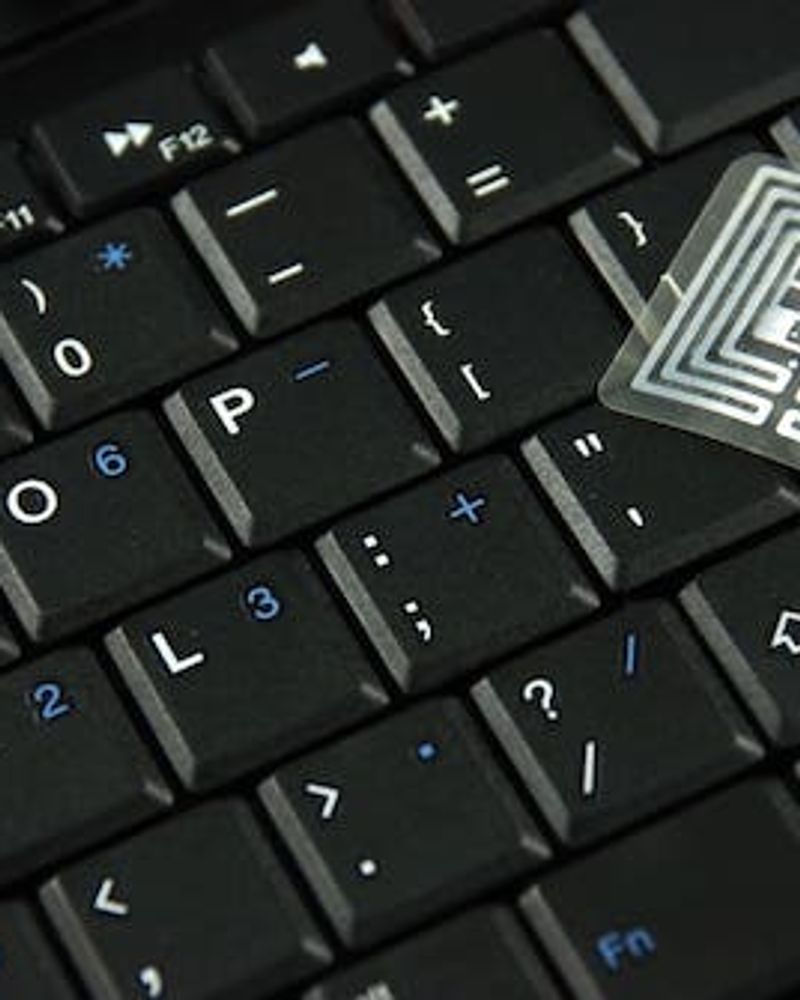
Nowadays, RFID technology is finding more and more applications and experiencing strong growth. The newly introduced contactless payment option for bank cards is primarily based on this technology. However, it definitely has many more application fields and can also advance your company by simplifying and automating processes. In the following article, we will therefore discuss the advantages of RFID applications and some practical examples.
How does basic RFID technology work?
RFID belongs to a group of technologies known as automatic identification and data capture (AIDC). AIDC methods automatically identify objects, collect data about them, and enter that data directly into computer systems without human intervention. RFID methods use radio waves for this purpose. At a basic level, RFID systems consist of three components: an RFID tag or smart label, an RFID reader, and an antenna.
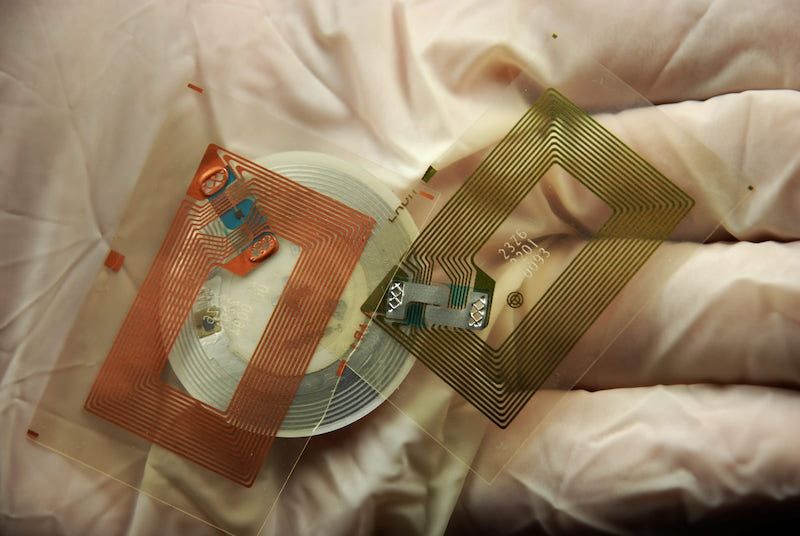
RFID tags contain an integrated circuit and an antenna used to transmit data to the RFID reader (also called an interrogator). The reader then converts the radio waves into a more usable form of data. The information collected by the tags is then transferred via a communication interface to a host computer system, where the data is stored in a database and can be analyzed at a later time.
RFID for industrial applications
In the industry, the significance and application of RFID will experience a boom in the coming years due to its versatile use. Many companies are already transitioning today, as the identification of goods, but also people, is significantly easier.
Aerospace
In aerospace, supply chains and baggage tracking can be simplified. On flights, many goods are often transported on and off board, causing confusion. By placing an RFID receiver in cargo holds and giving each item its own tag, there would be no need for goods inspection, as it would be automatically recorded what moves on and off board.
Healthcare and medical industry
Similar applications exist in healthcare with the same principle, but for medications. However, one can go further and place an RFID tag in patients' wristbands, allowing doctors to scan them and immediately know which patient it is and what their medical condition is.
Manufacturing
In construction and other related industries, materials are often the largest project expenses. On large construction sites or operations, finding materials can be problematic. By applying RFID technology, this can be eliminated, as materials and building materials can be easily located.
Warehousing in the food industry and distribution centers
Tracking goods at the item level is beneficial in many industries, but retail has one of the highest ceilings for RFID deployment possibilities. As mentioned earlier, tracking items across the entire supply chain is wonderful, but imagine being able to track items across the entire supply chain to the point of sale. With a well-designed inventory system that exchanges data across all business areas, you have a treasure trove of actionable data. One last additional advantage: Store employees can count inventory with an RFID handheld reader in minutes.

Meat processing plants
In meat processing plants, the application of RFID systems can be used to trace meat back to its slaughter location and breeding area. Safety from germs, in case of contamination, can also benefit as they can be traced back more quickly.
Greenhouse facilities
Pest infestations in greenhouses often result in large amounts of food being lost. With RFID, these pests can be quickly detected and minimized. Additionally, it is easier to know which plants need to be watered on which days, as employees can use a reader to check the plant's water level.
Car rental
Avis Rent a Car used RFID to recognize vehicle returns, achieving great success in customer service by allowing customers to park in any available spot and leave. Although the two technologies sometimes compete, RFID complements GPS well in many fleet management applications. Cost-effective, passively powered RFID tags are well-suited for local vehicle tracking, while more expensive, actively powered GPS systems provide a solution for vehicle monitoring over long distances.

Amusement parks
Disney recently integrated RFID technology into its admission tickets to enhance the customer experience in theme parks by eliminating the need to scan and swipe tickets at rides. The RFID-enabled tickets also provided park operators with a rich source of information, as they could track guest movements throughout the park.
Casinos
One of the most common applications of RFID technology is loss prevention. This was recently demonstrated when a $1.5 million heist was thwarted by RFID-embedded poker chips. However, loss prevention is not the only way casinos can use RFID tags. Casinos can use the tags to record how much they spend, where they spend it, and use this information to keep them in the game longer.
Conclusion
As you can see, RFID industrial applications are incredibly vast. In this article, we have only mentioned a few examples, but there are many more application areas, such as tracking cars or any other items. Virtually any company can automate processes with RFID technology and benefit from it, so if you have a company, you should further explore this technology.