IoT in Industry: How Smart Solutions Revolutionize Production
How the Smart Factory is transforming manufacturing by improving production, quality control, and efficiency through real-time data.
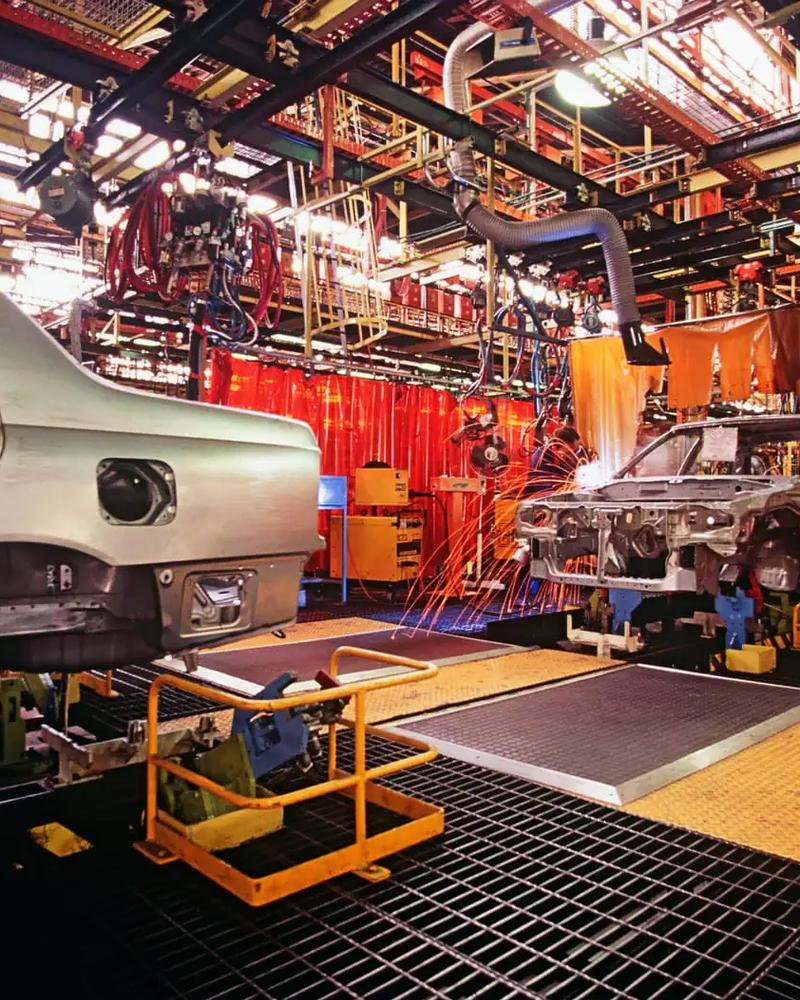
The manufacturing industry is at a turning point: traditional production methods meet cutting-edge technologies. While factories have long relied on automation, the integration of the Internet of Things (IoT) goes far beyond mere efficiency gains—it fundamentally transforms production processes, quality controls, and overall operational thinking. This technological upheaval is not just an evolution but a complete realignment of industrial performance.
Manufacturing companies worldwide recognize the potential of IoT solutions: processes can be specifically optimized, costs reduced, and competitive advantages secured in the long term. The combination of sensors, connectivity, and data analysis creates intelligent systems that learn, adapt, and improve autonomously—touching all areas of the industrial value chain, from machinery to the supply chain.
What are Smart Factory IoT Solutions?
Connected Intelligence for Dynamic Production
Smart Factory IoT describes a highly connected ecosystem of devices, sensors, and digital systems that form the foundation for intelligent manufacturing. Unlike traditionally automated plants that rely on fixed processes, IoT-based Smart Factories enable flexible production with real-time decision-making and continuous optimization.
Definition and Core Principles
Smart Factory IoT goes far beyond simple device networking. It connects production facilities, quality management, supply chain control, and workforce deployment into a digital overall system. Through central platforms, all processes can be monitored, analyzed, and controlled—data-driven and in real-time.
The crucial difference from traditional automation lies in the ability to learn and adapt: while classic systems are rigidly programmed, Smart Factory solutions analyze patterns, predict outcomes, and proactively adjust processes.
Key Advantages Over Traditional Production:
- Scalable structures that grow with business goals
- Adaptive systems that improve themselves through data usage
- Responsiveness to changing market conditions
- Predictive error prevention through data-based forecasts
- Seamless integration of all manufacturing areas

Components of IoT-Supported Manufacturing Systems
Modern industrial IoT systems consist of a variety of integrated components:
- Sensor-connected machines, continuously capturing performance data
- Edge Gateways and On-Site Data Processing, enabling rapid responses
- Cloud Platforms with AI Algorithms, recognizing and optimizing production patterns
- Human-Machine Interfaces, allowing operators to monitor and control systems remotely
- Integration with ERP and MES Systems for seamless data flows from manufacturing to management
Legacy Integration with Flexibility
Smart Factory IoT can also be integrated into existing plant landscapes. Even older machines can be retrofitted with sensors. This creates a holistically networked production environment that replaces historical reporting systems with real-time transparency—resulting in noticeable efficiency gains.
Key Technologies of Smart Production
Sensors and Data Acquisition
The heart of any IoT-supported manufacturing is sensors that continuously measure key parameters such as temperature, pressure, or vibration. Especially machine vision systems perform exceptionally in quality control: they detect the smallest defects and automatically check dimensional accuracy or product specifications.
Asset Tracking with GPS additionally provides full transparency over inventory, locations, and movements—not only enabling tracking but also theft protection and precise resource planning.
Automation and Control
Modern automation combines classic control with IoT functionality. For example, PLC systems become IoT-enabled, allowing remote monitoring with familiar operational security.
Autonomous transport and robotic systems operate in conjunction with the IoT network, coordinating material flows and dynamically executing tasks. Predictive maintenance systems detect wear early and prevent failures.
Typical Sensors for Condition Monitoring:
- Trend analyses for gradual performance losses
- Vibration sensors for early detection of mechanical defects
- Temperature sensors to prevent thermal overload
- Oil analysis to assess wear and contamination
- Acoustic monitoring for bearing or gearbox damage
Security Monitoring and Threat Detection
Monitoring device authentications ensures that only authorized endpoints can access network resources and transmit data—a critical factor as the potential attack surface grows with the expansion of IoT networks.
Anomaly detection algorithms analyze the behavior of connected devices in real-time and identify potential security threats. Unusual data transmissions, unexpected connections, or conspicuous resource usage can indicate compromised systems early on.
Compliance monitoring functions support companies in meeting regulatory requirements. Detailed audit trails document device access, data flows, and security-relevant events—an indispensable basis for audits and forensic investigations in case of incidents.
Edge Computing and Real-Time Analytics
With Edge Computing, data can be processed directly at the point of origin. Local analysis reduces latency and makes critical processes independent of the cloud—especially during production bottlenecks or network outages.
Machine learning models operating at the edge intelligently adjust production parameters—based on historical data and real-time input. Additionally, digital twins enable the simulation and optimization of real manufacturing processes in the virtual space.
Connectivity and Communication Standards
Reliable connectivity is the backbone of any IoT solution. Industrial Ethernet, WLAN, and 5G ensure fast, stable data transmission—even with high device volumes.
Protocols like MQTT and OPC-UA secure standardized data exchange between systems and manufacturers. Additionally, modern IT security architectures protect sensitive data from unauthorized access, balancing openness and protection.
How Smart Factory IoT Transforms Manufacturing
Efficiency and Production Optimization
Real-time data make production processes fully transparent. Bottlenecks can be identified early, capacities optimally utilized, and production plans dynamically adjusted. Automated quality controls prevent defective products during the process and reduce scrap costs.
Dynamic planning systems consider material availability, machine utilization, and delivery dates—enabling flexible manufacturing with high utilization and low waste.
Predictive Maintenance and Asset Management
Continuous monitoring of machine condition with IoT sensors enables maintenance as needed rather than at fixed intervals. This avoids downtime, reduces maintenance costs, and extends the lifespan of equipment.
Advantages of Automated Maintenance:
- Reduced downtime
- More efficient maintenance planning
- Demand-oriented spare parts procurement
- Improvement of Overall Equipment Effectiveness (OEE)
Supply Chain Integration and Transparency
IoT provides real-time insight into inventory, material flows, and consumption patterns. Automated replenishment systems ensure demand-driven supply with minimal inventory.
Supplier performance can be evaluated based on data, traceability from raw material to end product ensured, and quality issues quickly addressed—especially important in regulated industries with strict documentation requirements.
Energy Management and Sustainability
Smart energy management systems analyze consumption patterns, reduce operating costs, and enable targeted optimization.
Typical Measures:
- Load management to avoid costly peak times
- Efficiency monitoring of machines and equipment
- Integration of renewable energies
- Utilization of waste heat
- CO₂ accounting and environmental reporting
By precisely controlling material usage and recycling, not only is the environment protected, but it also makes economic sense.
Industry Examples of IoT in Manufacturing
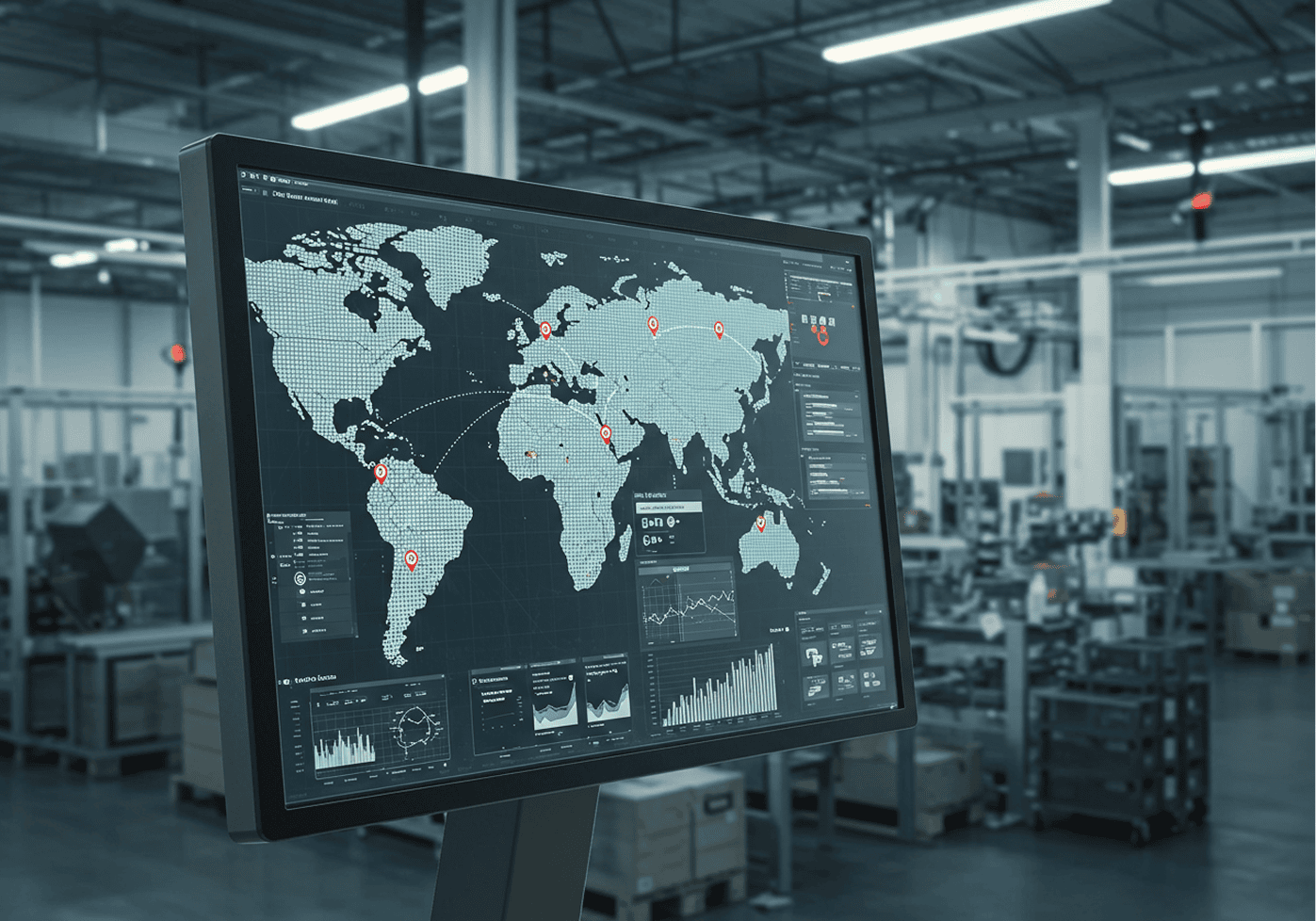
Automotive Industry
As a pioneer of intelligent manufacturing, the automotive industry uses IoT technologies specifically to optimize assembly processes, quality inspections, and variant management. Just-in-time strategies enable lean inventory while efficiently integrating individual customer requirements into production.
Food and Beverage Production
IoT sensors monitor temperature and humidity throughout the entire production chain—from raw material processing to delivery. This seamless control ensures reliable traceability and meets the highest hygiene and quality standards. At the same time, automated packaging reduces manual errors and increases efficiency.
Pharmaceutical and Medical Technology
In this highly regulated industry, precision and traceability are crucial. IoT solutions enable continuous cleanroom monitoring, help prevent contamination, and ensure compliance with legal requirements and counterfeit protection through comprehensive audit trails and serialization systems.
Electronics and Semiconductor Manufacturing
In the highly sensitive production of electronics and semiconductors, a controlled environment is essential. IoT systems capture critical parameters such as particle contamination, temperature, and humidity in real-time. Continuous data analysis helps improve process stability and yield. Traceability down to the component level is a given.
Successfully Implementing Smart Factory: What Matters
Smart Factory IoT represents a fundamental shift—from rigid manufacturing to adaptive, connected systems. Implementation offers not only automation but strategic competitive advantages: lower costs, better control, sustainable growth.
A thorough inventory is crucial. Where are the optimization potentials? Which systems can be integrated? A tailored implementation plan is developed in collaboration with IoT experts.
Recommendation:
- Examine existing processes for integration potentials
- Prioritize quickly implementable use cases
- Consider IT and OT together
- Train and involve employees early
- Consider scalability from the start
Frequently Asked Questions
How quickly do Smart Factory IoT investments pay off?
Typically, the first positive effects are seen after 6 to 12 months. The full ROI is usually achieved within 2 to 3 years—depending on the scope and use cases.
How can the cybersecurity of connected production systems be ensured?
Through a multi-layered security concept: network segmentation, encryption, regular updates, and access control. Collaboration with experienced IoT security service providers is essential.
What challenges exist when retrofitting existing systems?
Typical hurdles are incompatible interfaces and integration complexity. However, modern solutions offer flexible adapters and connectors that enable connectivity even for older machines.
How do IoT systems integrate into existing ERP and MES structures?
Through standardized APIs and communication protocols. Many IoT platforms come with pre-configured interfaces to common systems.
What skills does the team need for IoT operations?
Required are skills in data analysis, system monitoring, and IoT device management. A gradual skill development is recommended during system implementation.
Do you need support with your start into IoT-supported manufacturing?
We offer free and non-binding advice.
Read on

Asset Performance Management: The 2025 Guide to Revolutionizing Industrial Operations
How Asset Performance Management 2025 revolutionizes industrial operations. Optimize asset performance, minimize failures, reduce costs.
Putzmeister brings movement to special vehicle construction – with IoT tracking from SmartMakers
Putzmeister saves over 1,000 hours of search time annually with IoT tracking, paving the way for automated manufacturing in special vehicle construction.
Container Cycles 4.0: How to Get a Grip on Return Logistics
In this webinar, we show you how leading companies stop the loss of reusable containers and automate the tracking of their load carriers' return logistics.