IoT for Supply Chain Management: How the Internet of Things Improves the Supply Chain
Discover what IoT stands for in supply chain management, why it is important for your business to save money in the long term and increase profits.
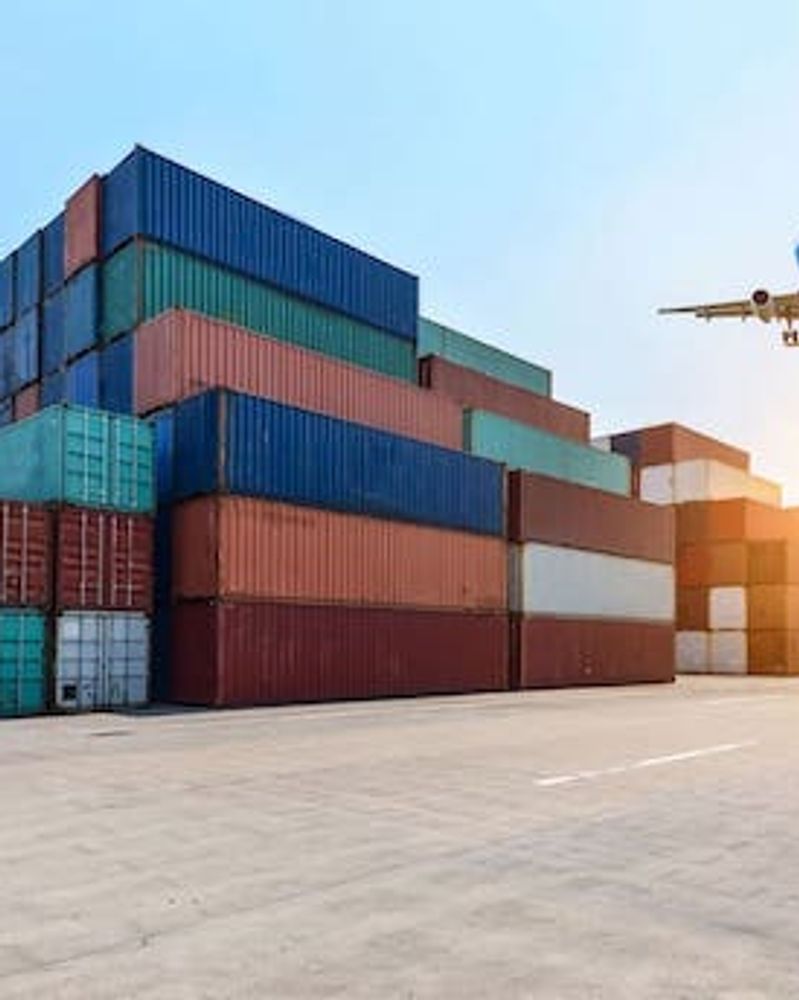
The Internet of Things (IoT) is becoming increasingly commonplace in society and is beginning to have a significant impact on businesses and the economy. One of the most important areas that IoT is beginning to change is supply chain management.
Especially in today's times, we can clearly see that a good supply chain management system is key to the long-term success of any company. Companies that use IoT in the supply chain can have a significant competitive advantage over those that do not.
How the Internet of Things helps optimize the supply chain
Supply chains are becoming increasingly complex as more and more players are involved in the process. This complexity makes it difficult to get a clear picture of what is happening at any given time. The Internet of Things (IoT) can help solve this problem by providing real-time transparency across all assets and processes in the supply chain.
This information can be used to ensure that bottlenecks are avoided and the supply chain runs smoothly. In addition, IoT can also help improve traceability, allowing companies to see exactly where their products are at any given time.

Examples of IoT in the supply chain
There are many different ways IoT can be used to improve supply chain management. Here are just a few examples:
- Connected devices can be used to track inventory and automatically reorder when it runs low.
- GPS tracking allows the location of shipments to be tracked in real-time.
IoT is still in its infancy but is already having a significant impact on supply chains. As technology continues to develop, further transformative changes in this area are expected.
Why are efficiency and reliability important within the supply chain?
Efficiency is important because it helps reduce costs and improve profitability. Reliability is important because it helps ensure that products are delivered on time and meet customer expectations.
The Internet of Things can help improve both efficiency and reliability by providing real-time insight into all aspects of the supply chain. This information can be used to identify bottlenecks and take action to avoid them. Additionally, IoT can help companies track their products to ensure they are delivered on time.
The benefits of IoT for supply chain management are just beginning to be recognized. As technology continues to develop, further transformative changes in this area are expected.
How IoT can help in the supply chain
Companies that use IoT technologies in their logistics see great benefits. The Internet of Things can help companies track inventories, assets, and shipments in real-time. This allows companies to quickly respond to delays or bottlenecks. IoT also enables companies to anticipate delays so that customers are not surprised by them.
Benefits of using IoT in the supply chain
Overall, the use of IoT in supply chains offers many benefits:
- Increased transparency in the supply chain
- Improved traceability in transportation
- Faster response time to infrastructure disruptions
- Reduced inventories through intelligent methods
- Increased efficiency and reliability of suppliers
- Reduction of downtime
- Higher customer satisfaction
- Long-term cost-saving potential
Challenges in logistics for companies without IoT technologies
For companies without IoT technologies, transparency and traceability of the supply chain can be a challenge. The reason is that these companies often rely on manual processes and paper-based documentation.
Walmart as an example
An example of a company that missed the transition to modern IoT technologies in its logistics is Walmart. The company struggles to keep up with Amazon's fast delivery times. Amazon achieved this by using a variety of technologies, including IoT in the supply chain and logistics. This allows the company to track packages and inventories in real-time. Walmart is trying to catch up by investing in similar technologies.

The future of IoT and supply chain
In the future, more companies will use IoT technologies to improve their efficiency and reliability. Additionally, more companies will use IoT to track inventories and deliveries in real-time. Ultimately, these changes will lead to higher customer satisfaction and lower costs.
Conclusion
And as always in nature, there will be a battle for leadership and the title of "first-mover" in the field of IoT logistics. The company that manages to successfully implement these technologies will have a significant competitive advantage.
To be successful, companies must start investing in IoT technologies now. They need to experiment with different solutions to find out what works best for their business. Those who fail to transition to IoT-supported logistics are likely to fall behind.
Frequently Asked Questions
What is supply chain optimization?
Supply chain optimization is about improving the supply chain to make it more efficient. This can include reducing inventories, improving delivery times, or facilitating shipment tracking. The goal of optimization is to make the supply chain as efficient as possible to minimize costs and maximize customer satisfaction.
What makes a good supply chain?
A good supply chain should be able to respond quickly to disruptions and have a high level of transparency. This means that the supply chain quickly identifies and responds to any problems that arise. Additionally, the supply chain should also be able to track inventories and shipments in real-time. This allows companies to quickly identify and address disruptions.
Start now and improve your supply chain management with IoT.
Read on

Asset Performance Management: The 2025 Guide to Revolutionizing Industrial Operations
How Asset Performance Management 2025 revolutionizes industrial operations. Optimize asset performance, minimize failures, reduce costs.
IoT in Industry: How Smart Solutions Revolutionize Production
How the Smart Factory is transforming manufacturing by improving production, quality control, and efficiency through real-time data.
Putzmeister brings movement to special vehicle construction – with IoT tracking from SmartMakers
Putzmeister saves over 1,000 hours of search time annually with IoT tracking, paving the way for automated manufacturing in special vehicle construction.